By Patrick Foley, Business Owner
Gutter Maintenance in Munster at a Glance
- Cleaning your gutters twice a year, in spring and autumn, is the single most effective thing you can do to prevent overflow and water damage in Cork, Limerick, Kerry, Clare, Tipperary and Waterford.
- Minor faults caught early are far cheaper to fix: a typical gutter repair costs between €500 and €1,900, while a full replacement runs €1,000 to €6,000 or more depending on material and house size.
- Autumn leaf fall and Atlantic storms are the two biggest threats to gutters across Munster, and both are manageable with a routine check before and after winter.
- Repair work carries a minimum three-year guarantee and up to ten years on major work; any job involving a full gutter replacement also carries the Lifetime Leak Guarantee.
- Munster Gutters has served all six Munster counties since 2010 with fully insured, registered teams and free no-obligation written quotes.
Why seasonal maintenance matters for Munster gutters
A gutter system works quietly in the background every day, directing rainwater away from your walls, foundations and fascia boards. When it fails, the consequences can be expensive: damp walls, rotting timber, cracked render and, in worst cases, water tracking into the house itself. Regular maintenance keeps the system working, and in a county like Kerry or Clare where Atlantic rainfall is heavy and persistent, that matters more than it might elsewhere.
The good news is that most gutter problems are straightforward and affordable to fix when they are caught early. A leaking joint or a sagging bracket costs a fraction of what you pay once water has been quietly damaging the fabric of the building for a season or two.
Spring: the first check of the year
After winter, gutters typically carry a mix of decomposed leaves, moss, silt and whatever came off the roof in the storms. A spring clean-out gives you a fresh start before the heavy April and May showers arrive.
What to look for in spring
- Debris and blockages in the gutter channel and at downpipe outlets.
- Joints that have worked loose or where the sealant has cracked over winter.
- Brackets that have pulled away from the fascia board.
- Sagging sections where the fall towards the downpipe has been lost.
- Any sections of cast iron that show new rust or cracking after frost.
If the fascia board behind the gutter feels soft when you press it, that is a sign water has been sitting against it. It is worth having it looked at before it spreads further. You can read more about what to do on our fascia and soffit service page.
Tree trimming
Spring is also a good time to trim back any branches that hang over the roof or gutters. The more you can keep off the roof, the less work the gutters have to do in autumn.
Summer: a quieter season, but worth a check
Summer is generally the easiest time of year for gutters. Rainfall is lower, and there is less leaf fall. That said, it is worth a quick check in June or July for one specific reason: summer storms in Munster can be brief but heavy, and a blocked downpipe can cause a surprising amount of overflow in a short time.
Checking for standing water
After a heavy rain shower, stand back and watch the gutters for a minute. Water should flow freely to the downpipe and away. If you see overflow at any point along the run, or if water is pooling at the base of the downpipe rather than draining, there is a blockage or a fall problem worth investigating.
Landscaping and drainage
Overhanging trees and dense hedging close to the house contribute to debris in the gutters year-round. Keeping these trimmed back in summer reduces the load come autumn. It is also worth checking that surface water around the base of the house is flowing away from the foundations rather than pooling against the wall.
Autumn: the most important clean of the year
For most homes across Munster, the October and November clean is the critical one. Leaf fall from sycamores, chestnuts and ash can fill a gutter run in a matter of weeks, and once the channel is blocked, the next heavy rain sends water straight over the edge and down the wall.
Leaf removal
Clear the gutters thoroughly in late October or early November, once most of the leaves have fallen but before the first hard frosts arrive. Pay particular attention to corners, angles and the area directly above downpipe inlets, where debris tends to collect fastest.
Gutter guards
If you find yourself clearing the same section of gutter every autumn, gutter guards or leaf screens are worth considering. They do not eliminate maintenance entirely, but they can significantly reduce how often a full clean-out is needed.
Preparing for winter
Before winter sets in, check that:
- All downpipes are clear and discharging properly.
- The gutter falls correctly towards the outlets; there should be no low spots where water sits.
- All joints and brackets are secure.
- Any repairs identified in spring have been carried out.
A gutter that is already slightly blocked going into winter is the one that creates ice problems in January. A clear system drains freely and is far less likely to cause trouble.
Winter: watching rather than working
There is not much active maintenance you can do once temperatures drop, but winter is when problems make themselves visible. Keep an eye out after heavy rainfall or a cold snap.
Signs of trouble in winter
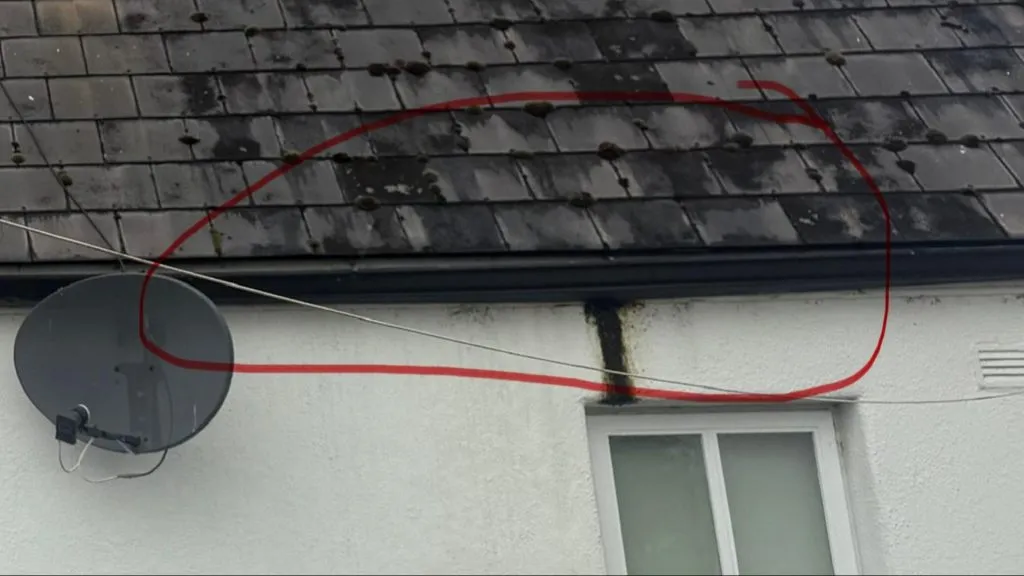
- Water staining on exterior walls below the gutter line, which suggests overflow.
- Ice forming along the gutter edge or at the base of a downpipe, which points to a blockage or a drainage issue.
- Gutters that look visibly lower at one end or have pulled away from the fascia.
- Damp patches appearing on internal walls adjacent to the roof line.
If you see any of these, note where they are so you can have them addressed in spring. Waiting until after winter to deal with most gutter faults is sensible: there is no point doing work that frost or storms will undo. The exception is a serious overflow that is getting water into the building, which should be looked at promptly.
For more on dealing with ice and frost damage, see our article on frozen, snow and ice-damaged gutters.
The case for acting early: what maintenance actually costs
The honest reason to keep on top of gutters is a financial one. Small faults are cheap. Neglected faults are not.
| The job | Typical cost |
|---|---|
| Small repair: a couple of leaking joints on one run | €500, €800 |
| Typical repair: sagging run re-aligned, brackets renewed, joints re-sealed, a downpipe | €1,000, €1,900 |
| Extensive or cast-iron repair: multiple runs, period property | €1,900, €3,000 |
| Full uPVC replacement on a typical semi (approx. 20 m) | €1,000, €1,400 |
| Full cast-iron replacement on a period property | €2,100, €6,500+ |
Catching a cast-iron section while it is still repairable keeps you in the lower end of the repair range. Letting the same section corrode through and spread the problem along the run can push you into a full replacement job at multiples of that cost. The difference is usually one annual inspection.
For a fuller breakdown of what repairs cost across Munster, see our page on gutter repair.
Cleaning your own gutters: tools and a few cautions
Some homeowners are comfortable cleaning gutters themselves on a single-storey or low two-storey property. If you are, the basics are a sturdy ladder, a trowel or scoop for debris, a bucket, and a garden hose to flush the run and check the downpipes are clear. There are also gutter-cleaning attachments available that fit onto a standard hose or pressure washer and let you work from ground level.
A couple of things worth knowing:
- Always have someone at the base of the ladder. Never lean to the side to extend your reach; move the ladder instead.
- On a two-storey house or anything above about four metres, professional cleaning is the safer choice.
- While you are up there, take the time to look at the condition of the brackets, joints and fascia board. That five minutes of inspection is as valuable as the cleaning itself.
When to call a professional
Some jobs are straightforward DIY; others are worth handing over. A professional is the right call when:
- The gutters are on a two-storey or higher building.
- You have cast-iron gutters on a period property in Limerick, Waterford or Cork city, where getting the repair or replacement right matters for planning reasons as well as performance.
- You have found damage you are not sure how to fix: a cracked section, a joint that will not seal, or a fascia board that feels soft.
- You want a written condition report, for instance before a property purchase or after storm damage.
Our gutter cleaning service covers all six Munster counties, and every clean includes a condition check while we are on site.
Guarantees on repair and replacement work
All repair work carried out by Munster Gutters carries a minimum three-year guarantee, with up to ten years on major repairs. Replacement work carries a ten-year guarantee. Any job that involves a full gutter replacement also carries the Lifetime Leak Guarantee, giving you long-term peace of mind on the most significant investment you will make in your drainage system.
Useful links
- Gutter cleaning service
- Gutter repair service
- Gutter replacement service
- Gutter maintenance service
- Fascia and soffit service
- All guttering services across Munster
- Common gutter repair issues in Kerry
- Common guttering issues in Cork City
- Essential guttering tips for Limerick homeowners
If you would like a free, no-obligation quote or simply want advice on what your gutters need, give us a ring on 021 7020328 for Cork, or find the number for your county on our contact page. We cover Cork, Limerick, Kerry, Clare, Tipperary and Waterford, and we are happy to have a look and tell you honestly what is needed.
Frequently asked questions
How often should I clean my gutters in Munster?
Twice a year is the minimum: once in spring after winter debris has settled, and once in late autumn after the main leaf fall. Homes close to large trees, particularly in wooded parts of Cork, Kerry or Tipperary, may benefit from a third check in midsummer.
What is the best time of year to have gutters professionally cleaned?
Late October or early November is the most useful time, once most leaves have fallen. A spring clean in March or April is the second priority. If you can only do one, the autumn clean matters more.
How do I know if my gutters need repair rather than just a clean?
If cleaning them does not stop the overflow, or if you notice water staining on the wall below the gutter line, sagging sections, or joints that are visibly open or leaking, that is a repair job rather than a cleaning job. A condition check while cleaning will usually catch these.
What does gutter repair typically cost in Munster?
A small repair, such as a couple of leaking joints, typically costs €500 to €800. A more typical repair involving re-alignment, bracket replacement and re-sealing runs €1,000 to €1,900. Extensive work on cast-iron systems can reach €3,000. The price depends on what needs doing, not simply on how many metres of guttering you have.
Are cast-iron gutters worth repairing or should I replace them?
Cast iron is worth repairing while the damage is localised, since well-maintained cast iron can last 60 to 80 years or more. Once corrosion has spread along the run or sections have cracked through, replacement becomes the more practical option. We will tell you honestly which applies on the day.
Can I clean gutters myself on a two-storey house?
It is possible but it carries real risk. Working at height on a two-storey property without the right equipment and a second person present leads to accidents every year. For single-storey work with a helper at the base of the ladder, careful DIY is reasonable. For anything higher, professional cleaning is the safer and often more practical choice.
What causes gutters to sag?
Sagging is almost always caused by bracket failure, either because the bracket has pulled out of a rotten fascia board, or because the original fixings were not adequate for the weight of water and debris. A sagging run loses its fall towards the downpipe, so water sits in it rather than draining away.
Do gutter guards work, and are they worth fitting?
They reduce how often the gutters need clearing, particularly in areas with heavy tree cover. They do not eliminate maintenance entirely, since fine debris and moss can still build up over time. On a property where the autumn clean is an annual job, they are often worth the investment.
What guarantee does Munster Gutters give on maintenance and repair work?
Repair work carries a minimum three-year guarantee and up to ten years on major repairs. Replacement work carries ten years. Any job that involves a full gutter or roof replacement also carries the Lifetime Leak Guarantee.
Is there anything I should check after a storm?
Yes. After a significant Atlantic storm, check for sections of gutter that have pulled away from the fascia, downpipes that have come loose at a joint, and any overflow points that suggest a blockage has been dislodged or worsened. Water staining on the external wall below the gutter line is the clearest visual indicator that something has gone wrong.
How do I stop downpipes freezing in winter?
The most reliable prevention is making sure the downpipe is clear of debris before cold weather arrives. A blocked downpipe that holds standing water is the one that freezes and cracks. A free-draining pipe rarely causes problems. If you have a downpipe that has frozen solid, let it thaw naturally rather than using direct heat, which can crack uPVC or cast iron.
Does Munster Gutters cover my area?
We cover all six Munster counties: Cork, Limerick, Kerry, Clare, Tipperary and Waterford. We do not work outside Munster.